

There are three types of business owners:
Those who hide from problems.
Those who solve problems.
Those who don’t just solve them but who can flip the script, creating an opportunity others couldn’t recognise.
Not The End Of The Road
“The impediment to action advances action. What stands in the way becomes the way.” - Marcus Aurelius (Meditations, Book 5)
It was through the work of Ryan Holiday in his book The Obstacle is the Way that I first realised that difficulty could be more than what it appeared to be.
Over the preceding years, it has become more and more evident in what I have read about, heard about, witnessed or personally experienced.
I have also read about and listened to many stories about the founders of great companies over this period. There have been many stories, different people, circumstances, scenarios, and industries.
There has been but one constant, regardless of the story or its subject: problems arise.
I’ve also noticed that the more I research the topic that the same lessons tend to repeat themselves, again and again, through time and across all industries, and there are many different ways in which the people in question solve these problems.
One such example I used in my last article related to Brad Jacobs, how he turned a problem into an opportunity when a short seller decided to target his company (here).
So for this week’s article, I wanted to spend a bit more time on this.
If you are making your way in the world, no matter the arena, you will come up against problems.
There is no avoiding them, and those people who try and avoid them end up getting sideswiped when problems eventually surface, and they are usually so caught off guard that they struggle to recover.
Those of us who expect problems and know they are an unavoidable part of the human experience are then able to use them as a means of forward progress.
Below are 4 examples of successful business owners who decided to take control of their destiny and turned something negative into something immensely positive.
“I just had to assume there was a way through any obstacle, and then I’d find it. This is perhaps my most fundamental principle of entrepreneurialism, and to success in general.” - Sam Zell
Sam Walton
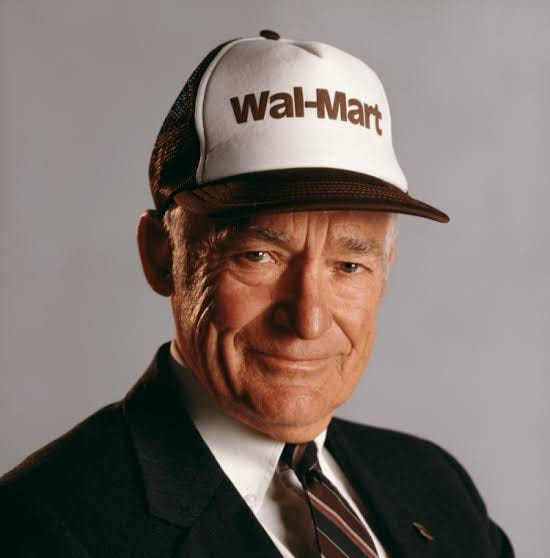
“I had to pick myself up and get on with it, do it all over again, only even better this time.” - Sam Walton
In 1945, a 27-year-old Sam opened his Ben Franklin store in Newport, Arkansas. This was his first foray into the world of retailing. He took over the store (part of the Butler Brothers chain of stores), the man who had been running the store was losing money, and he wanted out, as Sam said, “He was losing money and he wanted to unload the store as fast as he could. I realise now that I was the sucker Butler Brothers sent to save him.”
Sam and his wife, Helen, decided to make a go of the store and bought it for $25,000 (including a $20,000 loan from Helen’s father). Sam was full of enthusiasm and ideas, but this experience would teach him a crucial lesson.
The store would go on to become a major success that first year of business, with sales of $105,000 as compared to $72,000 the year before under the old management. Year 2 would see the sales increase to $140,000 and $ 175,000 by year 3. Sam’s Ben Franklin store was doing $250,000 in sales by year 5 with around $30,000 to $40,000 in profit.
It was this year that Sam was taught a valuable lesson. When agreeing to the lease at the beginning of the project, he didn’t think to include a clause in his lease that would give him the option to renew it after the first five years.
As it happened, the landlord of the building was a department store owner too, and having watched the success of Sam, he saw an opportunity to take over a strong premises and remove a competitor at the same time, as there was nowhere else in town to move the store.
So after 5 years of running his variety store and a majorly successful one at that, Sam Walton was back to square one because of a silly oversight. He had no one else to blame. This lesson, although a tough one, was one he would never repeat. Sam (and then Walmart) would always own his real estate from that day forward.
Henry J. Kaiser

“Problems are only opportunities in work clothes.” - Henry J. Kaiser
Henry J. Kaiser has been compared to Elon Musk, a modern-day titan of industry.
This was due to the scale of industry that he ran and the pace at which he worked and lived. He operated across many different industries: construction, shipbuilding, steel production, automobile production, aluminium production and even healthcare.
Henry experienced major success in the construction industry and was one of the main contractors in projects such as the Hoover Dam, the Bonneville Dam and Grand Coulee Dam.
In the 1940’s he unexpectedly ended up in the shipbuilding industry (Liberty Ships) as part of a consortium that had the aim of building more ships, at first as a means of supplying the UK in its efforts in World War 2 and then for the USA itself after the attack on Pearl Harbour brought them into the war.
Kaiser quickly brought his organisational powers to bear, ones that he had developed through the growth and management of his construction company and its major projects.
In effect, Kaiser was a talented project manager, delegator and team builder. He would find the best people and put them to work in the right place, under the right management and then trust them to do their job.
Kaiser used these powers alongside innovative techniques to start churning out ships at a speed and scale never before seen, reducing the time it took to construct the ships from months to weeks or even days.
It was here that he ran into a major bottleneck - steel supply.
Steel was a major ingredient in shipbuilding, and due to the war and the reluctance of the existing steel companies to work with him, his shipyards faced delays as they were at the mercy of their suppliers.
Never one to be at the mercy of others, Kaiser decided to take matters into his own hands and cut out the bottleneck. He founded Kaiser Steel, building his mill in 1942 beside his shipyard. He linked them via trainline (as well as with his Iron ore mine in the Eagle Mountains), creating a fully vertically integrated business and rapidly increasing the rate at which he could produce ships.
Before this, most of the steel production was focused on the East Coast and the Midwest, and now, because of Kaiser, the West Coast has easier access to steel.
Post-war, the company boomed as it moved into other industries and helped power the West Coast’s building boom after WW2.
Sam Zemurray
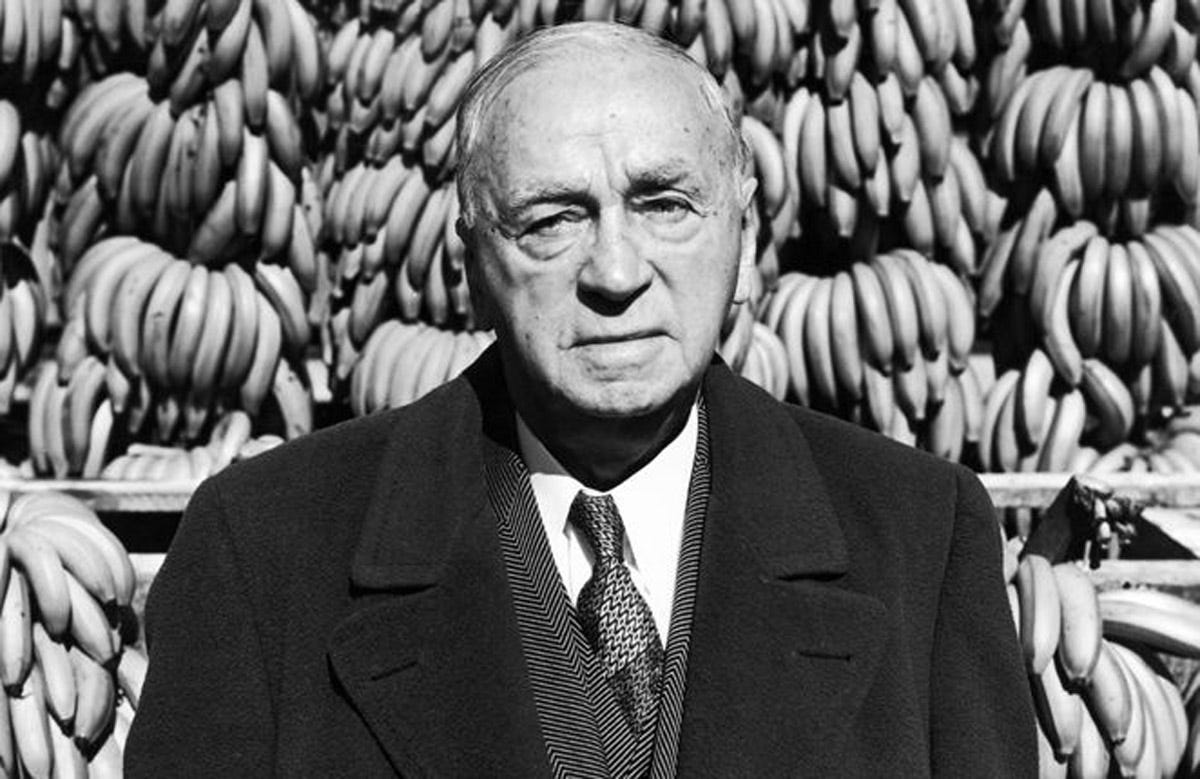
“If you know your business from A to Z, there's no problem you can't solve.” - Sam Zemurray
Sam, known as the banana king back in the late 1800s and early 1900s, was a young emigrant to the US from the Russian Empire (modern-day Moldova). He settled in Selma, Alabama, where his uncle owned a general store.
It was in these early years that Sam first came into contact with bananas, and he soon noticed a potential business opportunity where others saw only waste. Sam decided to take this opportunity and thus began the early days of what would be known as Cuyamel Fruit.
Over the next two decades, Sam would build it into one of the biggest banana companies in the world, competing with United Fruit (The largest Banana company in the world).
Sam encountered numerous roadblocks, one of which occurred in Honduras, where his company owned extensive tracts of land.
Sam’s company, Cuyamel Fruit, needed to build a bridge across the Ulúa River (referred to as the Utila in the book about Sam’s life, “The Fish that ate the Whale”) to transport their bananas to Puerto Cortés, so they approached the Honduran government to request permission to do so - they were denied. The president of Honduras at the time favoured United Fruit, Sam’s main competitor.
At this stage, many people would have accepted defeat and source another means of transport, but Sam was not one to take things lying down.
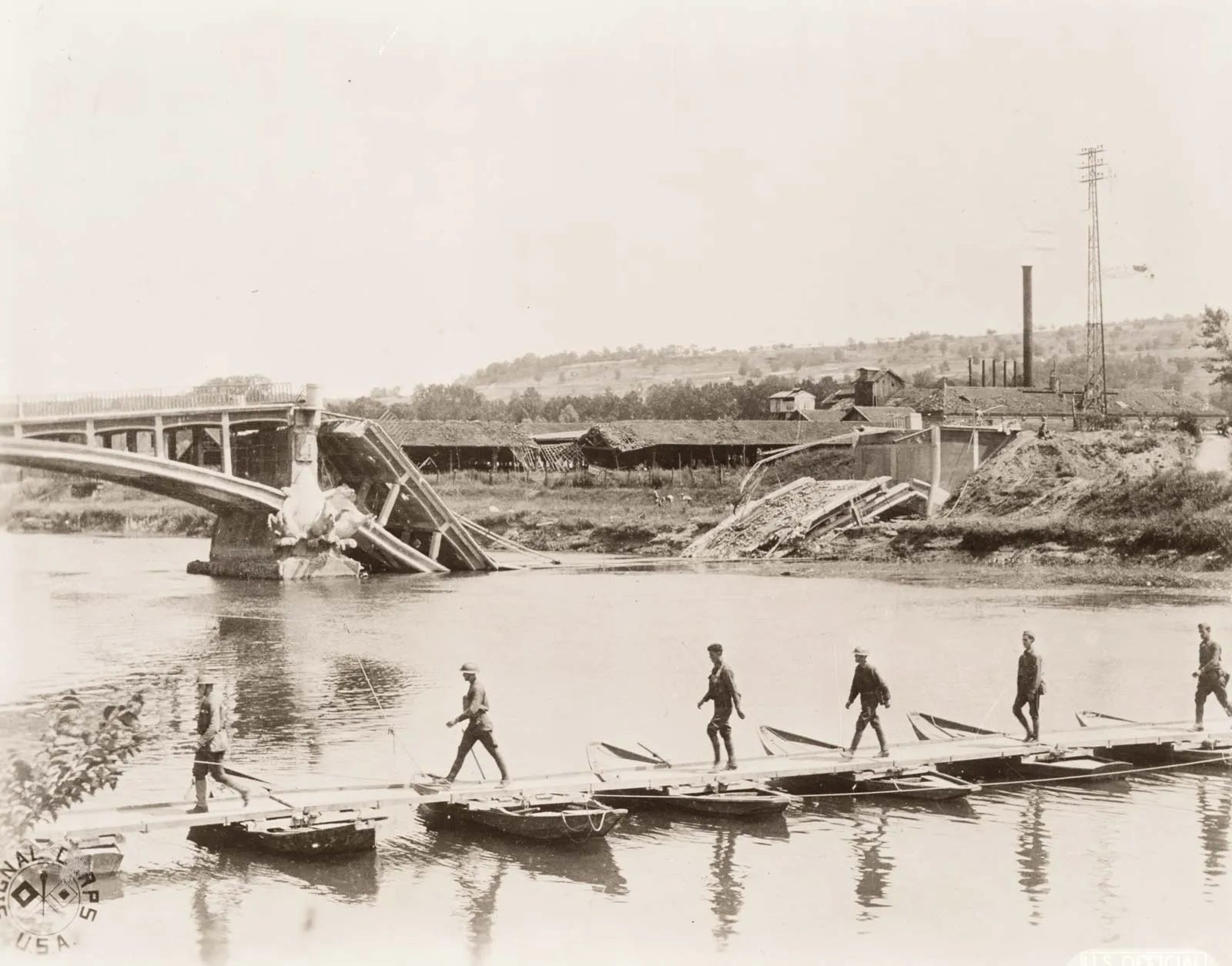
He decided to build abnormally long docks on both sides of the river and had his engineers create a temporary bridge (which couldn’t be called that) that could be assembled and disassembled in a matter of hours. It allowed the train to carry its cargo across the river and to the port.
When United Fruit complained to the Honduran government, Zemurray simply said, “Why, that’s no bridge. It’s just a couple of little old wharfs.”
Zemurray had so many instances of creativity that I had to add in this second example.
This took place in 1917 when both Cuyamel Fruit and United Fruit were pursuing a single 5,000-acre piece of land on the border between Honduras and Guatemala that both countries claimed ownership of.
As it happened, the dispute meant that the piece of land was owned by two different parties.
United Fruit decided they wanted the land and brought their massive weight to bear, and engaged their impressive legal teams to search through every document and deed to discover the true owner of the land.
Sam was much more practical; he simply approached both parties and bought the land from each of them, removing any doubt about who owned the land. He paid twice for it, yes, but what he likely saved in time and opportunity cost would have likely been much more expensive, let alone the massive legal fees that United Fruit incurred.
Phil Knight
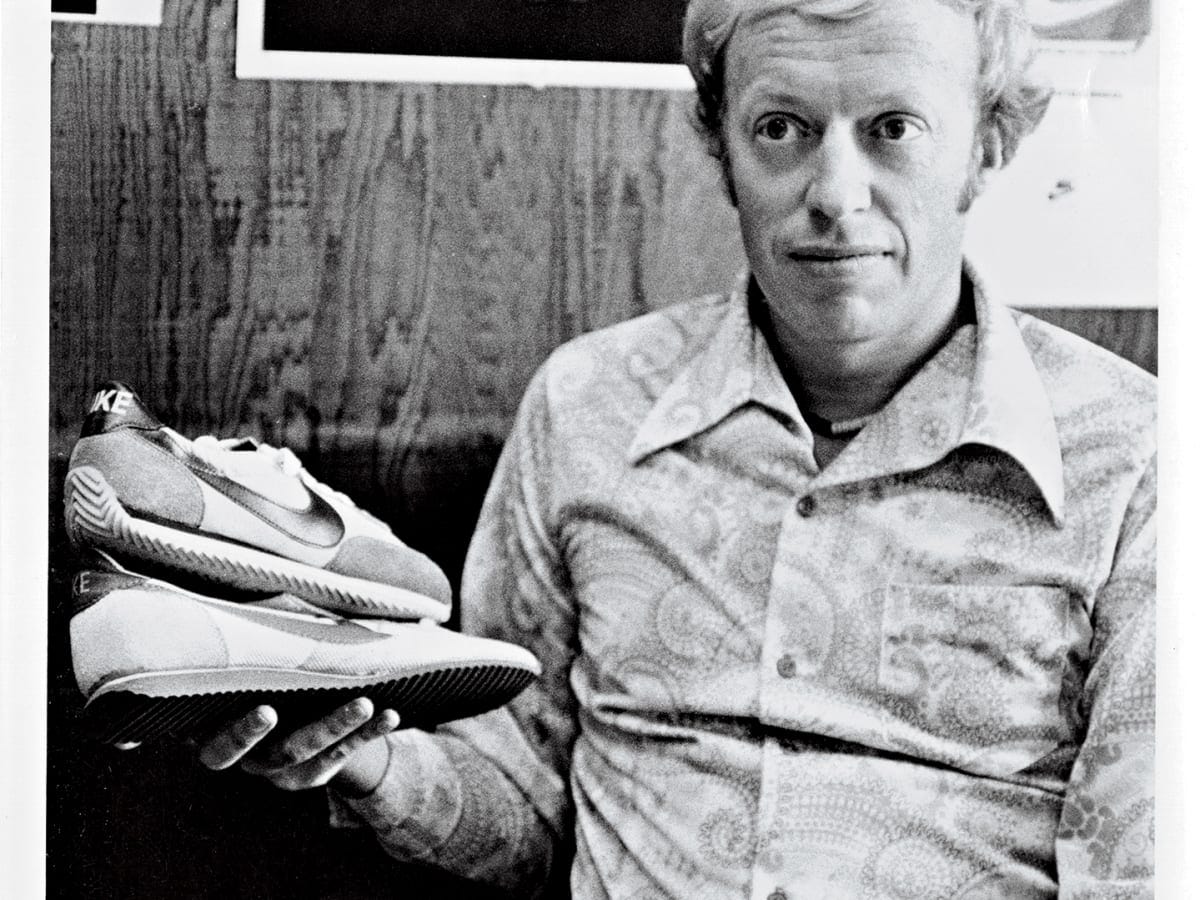
“When you see only problems, you're not seeing clearly.” – Phil Knight
Phil Knight set up Blue Ribbon Sports (BRS) alongside his previous track and field coach, Bill Bowerman, in 1964, based on an idea he came up with on a college paper that was written as part of his Stanford MBA in 1962.
At the time, the German company Adidas dominated the US market when it came to running shoes.
Phil’s paper investigated the idea that Japanese manufacturing could do to the shoe market what they had done to the camera market, produce a higher quality, lower-priced good that wouldn’t just compete but could dominate the market.
Through some graft and plenty of bluffing, Phil secures the exclusive US rights to sell the Tiger brand running shoes created by Onitsuka Co.(now known as Asics).
He quickly got to work, initially selling the shoes out of the back of his car at track and field events.
The first year was a modest success, selling approximately 1,300 pairs and earning $8,000. They more than doubled this by the end of year 2, and at this stage, they began to hire some help.
In 1966, they opened their first store in California and a year later, they expanded to the East Coast.
It wasn’t until 1969 that the company looked set to hit the $300,000 mark that Phil finally felt the time was right to quit his job as an Accounting Professor at Portland State University and pay himself a modest salary.
It was also in 1969 that Phil met Carolyn Davidson, who was a graphic designer and who would end up designing the famous Nike swoosh for $35.
That same year, Phil began to hear rumblings (from a trusted inside executive) that Onitsuka Co. were potentially courting other suppliers in the US.
Soon deliveries began to arrive late or incomplete. Phil tried to lock his supplier into a 5-year contract to steady the ship, but they would only agree to three years. Something didn’t feel right.
In 1971, Onitsuka Co. made an offer to buy 51% of BRS, which would have effectively made Phil an employee in his own company; he declined.
Over the next few months, Phil and Bill decided to design their own shoe and covertly made contact with a manufacturing plant in Guadalajara, Mexico, that had previously manufactured running shoes for Adidas for a period of time.
Then, Onitsuka Co. abruptly ended the contract; a massive blow to BRS, as they weren’t in a position yet to move away from selling the Tiger Brand. The company was in danger of folding.
This could have been an insurmountable obstacle for Phil.
BRS sued for breach of contract, and Onitsuka Co. countersued for trademark infringement, as BRS was selling their Cortez design. The judge ruled in favour of BRS (now becoming Nike) as Bill Bowerman had played a large part in the design of the shoe.
It was in this period that Nike was born, and the company began its development into its own self-sustaining entity.
Having had the foresight to design their own running shoe and source production, they now had to fully commit. They ramped up production of their first shoe, and in the meantime, sold through their remaining stock of Tiger brand running shoes, allowing them crucial breathing space until the production of their shoe was ready.
Nike - Phil and his team (including Bill, who was beginning to step further into the background) went from strength to strength, eventually becoming the sports apparel titan they are today.
Problems Are the Only Constant
There is no doubt that whatever you undertake in your life, you will be greeted by problems of varying degrees.
Those people who can best handle a problem, or even better, turn it into an opportunity, are the ones who will become successful in any endeavour they undertake.
“The road to success is paved with mistakes well handled.” - Stanley Marcus
What about this post made you think the most?
I’d love to hear from you in the comments!! 💬
Without problems there are no solutions! Love this piece, thank you for posting.
I am new to Substack but Share Your Perspective is offering collaboratively created content on a ton of topics. Please check us out!