

The art of storytelling is possibly the oldest, most effective way of passing on knowledge.
This has been done at scale through the medium of books since the invention of the Gutenberg press.
On “The Reading List” tab of the Helyos Newsletter, the first book you can find is “Extreme Ownership: How U.S. Navy SEALs Lead and Win” by Jocko Willink & Leif Babin.
Both men are highly decorated Navy Seals, with their most famous deployment coming during the war in Iraq in the 2006 Battle of Ramadi.
Below, we will delve into their experiences and the lessons they learned.
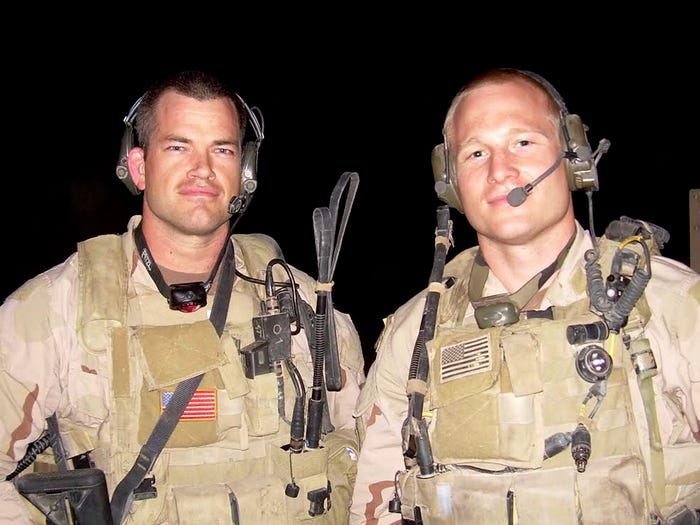
The core idea of the book is “Extreme Ownership”.
The premise is that we are responsible for everything that happens to us, and we alone can forge our own path.
Of course, the authors use hyperbole to make a point, but the message is clear.
The real idea is that “shit happens”, and sometimes we are the reason it happens, and other times, we aren’t.
The question is, will we wallow in self-pity about it, or will we take practical steps and take action?
The lessons in the book are conveyed creatively through the stories of the two men’s experiences in combat, with each chapter addressing a specific lesson.
I have split the post into two parts as I feel having two opportunities to digest the ideas in the book would be more beneficial to the reader.
1. Extreme Ownership
While on tour, an incident of friendly fire occurred. A soldier’s worst nightmare!
As a result of a cumulation of errors and miscommunications, a friendly Iraqi soldier was killed, and several US soldiers were injured.
Jocko, as the Commander of Task Unit Bruiser, SEAL Team 3, had to deal with the fallout and provide his superiors with someone to blame.
While putting together the brief and searching for the person, or persons at fault, he came to a realisation. The blame lay with one person only: him.
Regardless of the myriad of mistakes that were made or people responsible, in the end, he was in charge. If his subordinates made mistakes, it was because he didn’t train them well enough. Inform them enough. Give responsibility to the right people. Remove the wrong people, etc. Ultimately, he was responsible for the mistake.
Key takeaways:
Taking Ownership is not pick and choose; we must deal with the hand we are dealt and accept what we are left to deal with.
Mistakes are made, people are difficult to deal with, and circumstances are outside our control. All true but irrelevant. Things must be dealt with; someone must right the ship.
Blaming others may shift the responsibility, but it doesn’t solve the problem and those who can assume responsibility when others won’t will become much more effective leaders.
Respect tends to follow those who can take Extreme Ownership. Whether it be by your superiors or subordinates, people respect those who are willing to assume responsibility.
2. No Bad Teams, Only Bad Leaders
One individual can be enough to turn the tide of a team’s performance.
During SEAL Team BUD/S training, the next crop of potential SEAL’s are vetted. This has a very high dropout rate and is one of the toughest selection processes of any special operations unit in any military in the world.
The story in the book focuses on two teams competing in a gruelling challenge; one team is excelling, and the other is the poorest performing of the bunch. A huge shift occurs when one of the overseers decides to swap the team leaders. Almost immediately, the worst team starts to outperform the rest.
It is a very effective example of the importance of strong leadership and how the right person can contribute to a total shift in a team’s fortunes.
Key takeaways:
Leadership is everything when it relates to the performance of a team. A bad leader will have an effect on the performance of even the high-performing team members.
Effective leaders take responsibility for the performance of the group, ensuring the right people are performing the right tasks and that they do their part.
The leader sets the tone of the group, whether it’s the work ethic or the culture. Effective leaders ensure that the tone they are setting is beneficial to the group and the aim they are pursuing, and they remove any obstacle to that goal.
3. Believe
When Jocko was first informed that, going forward, his team were going to have to involve more conventional Iraqi soldiers on each of their missions, he wasn’t happy.
This was not welcome news, as these soldiers had the lowest quality training and equipment imaginable. They were nothing in comparison to the high level of training and expertise of the US Armed Forces, and especially not the Navy SEALs.
The presence of the Iraqi soldiers alongside the US troops on these missions could be a serious threat to the soldiers’ safety and their success in the field.
What eventually changed Jocko’s perspective was the understanding that if they did not train the Iraqi soldiers to defend their own country, then the USA would not be able to leave it any time soon.
It then became his job to convince his team of that same belief.
Key takeaways:
A leader must first and foremost understand and believe in their stated goal, and then they must also make their team believe in the mission.
Teams follow strong leaders, and if they see any doubt in the leader about the goal, that doubt will spread like an infection through the rest of the team.
Advantage can be found in buying into an idea. The Iraqi soldiers turned out to have unexpected benefits, such as local knowledge and an ability to spot things that were out of place. Things the US soldier wouldn’t be able to recognise.
The leader may not always agree with his superiors, but if he can see what it is they are trying to achieve, then he can believe in the goal and create and implement the best possible plan to achieve that.
To fully understand this, the leader “must be able to detach from the immediate tactical mission and understand how it fits into strategic goals.”
The senior leaders must take the time to listen to and understand their junior leaders’ concerns and then answer any questions they have. If junior leaders don’t understand the end goal correctly, they will not be capable of implementing the plan. It is the senior leader’s job to ensure that everyone understands this.
4. Check the Ego
The arrival of a new unit of American Army advisors and their team of highly trained Iraqi soldiers at the forward operating base was not a welcome one.
This group of Iraqi soldiers were by far the best trained and equipped that the American soldiers had come in contact with since arriving in the country. Alongside their US advisors, they had the potential to take over from the current SEAL platoon that was operating in that area.
The platoon commander brought his concerns to Jocko, clearly indicating that he was intimidated by the idea. Ho he thought he might just let the new arrivals figure things out for themselves. It was self-preservation, but it was a dangerous precedent to set.
Jocko reminded him why they were there: to defeat their enemy, and they needed to make sure they did so as a team. The commander immediately saw the errors of his ways and understood. He checked his ego, and instead, they decided to aid the new arrivals.
However, the new team showed a total lack of respect for their brethren in the Army and the SEALs. Their lack of respect for soldiers that they believed were “below” them in the pecking order, as well as their refusal to follow the grooming and dressing practices of the rest of the soldiers, did nothing but infuriate the other soldiers in the base.
Unwilling to listen to the advice of their experienced colleagues, it soon ended with this unit being directed to leave the base. Their behaviour presented far too much of a risk to the soldiers they would be working with. As a result, they had to watch the main action from afar.
Key takeaways:
The inability of a team or members of that team to remain humble will eventually lead to mistakes.
Higher-ranking executives or team members must understand how important their subordinates are to the overall goal and must treat them with the respect that they deserve.
The removal of certain privileges that those of higher rank possess can help foster a sense of shared experience with those of lower rank. The opposite can create an “us and them” environment.
Disciplined actions and routines help foster an atmosphere of responsibility, which enables a team to function effectively without allowing egos to run rampant.
Don’t allow ego to cloud judgment. If there are new team members who operate at a high level and you fear they may outshine you, realise that they are an extra asset to the team. Forget about the individual accolades and think of the overall team performance in search of achieving the goal. Help them use their talents to the best of their ability.
5. Cover and Move
U.S forces were involved in a team offensive that involved several units operating separately but as moving parts of the whole, each supporting the other.
Two sniper teams were active, and Leif was leading one of them. The sniper teams were present to provide overwatch and support to the ground forces involved in the offensive.
Leif’s team took up their position in their building they had selected during planning, as it seemed to be the best suited for their needs.
However, it turned out that when they arrived, the building wasn’t what they thought, and it wasn’t an ideal location for ensuring a solid defence, but it still appeared to be the best of some bad options, and they made it work.
The issue came as the offensive came to an end and the ground forces moved back to base. Leif’s team were in a poor defensive position, and enemy units were aware they were there. Standard Operating Procedure was to hold position and wait until nightfall before making their way back under the cover of darkness. However, Leif felt this would be much too risky as their position was known by the enemy and hard to defend; if given the time to mount a coordinated attack, it could mean disaster for the sniper team.
Leif decided to move back to camp now, before the enemy had a real chance to attack. They did so, and although they faced engagement, they managed to cover their backs and made their way back to base.
After arriving back, Leif was confronted by a senior SEAL Chief for not using the first sniper team to cover their return to the base. At first defensive, this quickly passed as he realised the truth in the statement. He had made an error, and he was lucky it hadn’t ended badly.
Key takeaways:
In any team or enterprise, there may be individuals within a team or multiple separate teams who like to move at a faster pace or work independently, but doing so can hamper the progress of the team. It can also render the team much less effective.
Each group can either hinder the overall group’s progress or they can work together to forward it, but communication is key between the different groups so that each can add its own element and contribute to the overall goal.
When teams within a business aren’t working together or are actively working against each other, they are creating silos in the business that are operating separately and not looking out for one another or the overall team. The business cannot function optimally and may even start to decline as a result.
6. Simple
A U.S Army officer who was working in an advisory role with a team of Iraqi soldiers had arrived at the newly erected base. He had a plan for the group’s first patrol; to him, it was a simple patrol.
However, he had no experience patrolling these areas, and his plan turned out to be much more complicated than he realised. When Jocko heard the plan, he realised many different variables had not been considered, and it was a much larger undertaking than the officer realised.
Jocko asked him to do a much simpler, shorter route for his first foray. He didn’t like the idea but agreed to take his advice.
The patrol went as Jock expected: chaotic and dangerous. Upon their return, the officer admitted his ignorance and that he had learned a valuable lesson.
It is not always beneficial to move fast out of the gate; sometimes it is much more important to move slowly and get to know the terrain better.
Key takeaways:
Motivation and excitement can get the better of us; we want to pursue a goal that involves a lot of work, and we intend to do it in record time. Yet, we have no experience of what it takes and no idea of what lies ahead.
Planning is crucial, but only the first step in a process. Small, simple steps are needed at first to find your footing and establish some experience in this area.
Obstacles will arise, and if you enter an area outside your circle of competence, the accumulation of obstacles can be your undoing. However, if you take a simpler approach, you can meet fewer obstacles initially and learn how to master them.
The more complicated a scenario, the more steps needed to complete it, the more likely it is that you will fail. Simply the objective, break it down over time into smaller, more achievable steps.
When you have people working alongside you, above you or below you, they need to know what it is you are offering them and what you want from them. An incentive scheme in the company must be simple and easy to organise, a project must be clearly broken down into its component parts, and every participant must know what part they are responsible for.
This has been a look at the first half of the book, “Extreme Ownership: How U.S. Navy SEALs Lead and Win”.
My next article will be Part 2, and it will focus on the second half of the book and the lessons within it.
What about this post made you think?
I’d love to hear from you in the comments!! 💬
Love this concept 🙏